Introduction
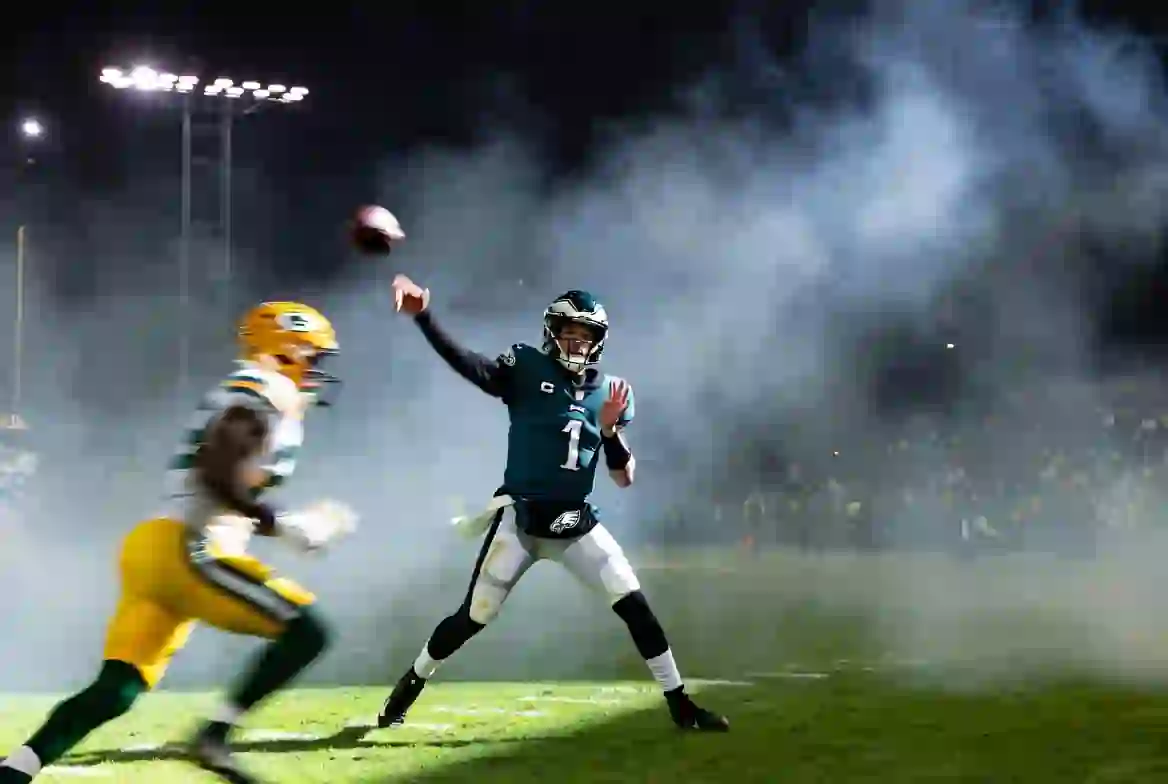
Every snap between the Philadelphia Eagles and Green Bay Packers writes a new chapter in NFL history. This matchup delivered hard hits, smart play-calling, and individual moments of brilliance. If you’re hunting for the definitive Philadelphia Eagles vs Green Bay Packers match player stats, you’ve landed on the right page.
We’ve stripped away the noise to bring you a clean, expert look at the passing numbers, rushing charts, defensive stands, and special teams impact. No filler, just the numbers and context that tell the real story of this heavyweight clash.
Jalen Hurts’ Passing Command and Ground Threat
Jalen Hurts carved the Packers’ defense with surgical precision from the pocket. He completed 26 of 38 attempts, piling up 278 passing yards and two touchdowns. His ability to extend plays turned broken protections into positive gains.
On the ground, Hurts added 48 rushing yards on 11 carries, constantly moving the chains on critical third downs. His quarterback rating reflected a player who never forced throws. Hurts’ body language showed total command of the offense, audibling at the line to exploit Green Bay’s coverage shells.
Jordan Love’s Aerial Attack and Pocket Movement
Jordan Love answered back with aggressive downfield shots for the Packers. He finished 22 of 39 through the air for 265 yards, firing two touchdowns but also tossing a costly red-zone interception. Love’s connection with his young receiving corps flashed serious potential. He absorbed three sacks but stood tall against Philadelphia’s relentless pass rush.
What stood out was his deep-ball accuracy on play-action rollouts. Love scrambled for 22 yards, proving he can hurt defenses with his legs when the pocket collapses.
Rushing Yards Breakdown: Barkley vs. Jacobs Clash
Saquon Barkley ran like a man possessed in his Eagles uniform. He gashed Green Bay for 94 rushing yards on 18 carries, including a bruising 24-yard touchdown where he broke two tackles. The Packers’ Josh Jacobs punched back with 78 yards on 21 attempts, grinding out tough yards between the tackles.
In the first half of the Philadelphia Eagles vs. Green Bay Packers game, both feature backs dominated player statistics. Philadelphia’s offensive line created wider running lanes, while Green Bay leaned on quick tosses to beat penetration. The yards-after-contact disparity heavily favored Barkley’s explosive cutting ability.
A.J. Brown and DeVonta Smith’s Route Dominance
A.J. Brown bullied Green Bay’s secondary with physical catches at the line of scrimmage. He secured 8 receptions for 114 yards, turning a quick slant into a 38-yard sprint down the sideline. DeVonta Smith’s route-running artistry yielded 6 catches for 72 yards, consistently finding soft spots in zone coverage.
Together, they forced missed tackles and generated massive yards after the catch. The Packers’ defensive backs struggled to disrupt their release timing. When Hurts needed a clutch conversion, Brown’s reliable hands or Smith’s crisp cuts always delivered.
Packers’ Receiving Duo: Watson and Doubs Step Up
Christian Watson’s blazing speed gave Green Bay’s offense an instant spark. He reeled in 5 passes for 89 yards, including a 42-yard bomb where he burned single coverage on a go route. Romeo Doubs complemented him perfectly underneath, catching 7 balls for 68 yards and a contested touchdown grab in the corner.
Their synergy helped Green Bay maintain long, time-consuming drives. The Philadelphia Eagles vs Green Bay Packers match player stats reveal how both receivers averaged over 12 yards per reception. Philadelphia’s secondary eventually adjusted by shading safety help toward Watson’s side.
Defensive Line Pressure and Sack Breakdown
Philadelphia’s defensive front created chaos from the opening snap. They registered 4 total sacks, with Haason Reddick bringing down Love twice on speed rushes off the edge. Jalen Carter’s interior push collapsed the pocket repeatedly, forcing hurried throws into traffic. For Green Bay, Rashan Gary notched 1.5 sacks, beating the right tackle with a lethal spin move.
The Eagles’ offensive line allowed just one additional sack, showcasing their elite pass-protection metrics. This trench battle truly defined the Philadelphia Eagles vs Green Bay Packers match player stats for defensive impact.
Secondary Coverage and Ball Production
Darius Slay grabbed the game-turning interception, reading Love’s eyes perfectly on an out route and returning it 35 yards. Philadelphia’s safeties played disciplined center field, preventing explosive touchdowns over the top.
Green Bay’s Jaire Alexander broke up three passes, sticking to DeVonta Smith like glue in man-coverage situations. Both secondaries delivered punishing hits to dislodge potential catches. The tackling efficiency from both squads kept yards after the catch to a minimum in the second half. Ball production ultimately swung momentum toward the Eagles’ sideline.
Third-Down Efficiency and Red Zone Execution
The Eagles converted 8 of 14 third-down attempts, a testament to Hurts’ composure under duress. They punched in three touchdowns during four red-zone trips, leaning on Barkley’s power runs between the guards. Green Bay managed 5 of 12 third-down conversions but stalled twice inside the 20, settling for short field goals.
These wasted opportunities proved fatal when reviewing the Philadelphia Eagles vs Green Bay Packers match player stats. Philadelphia’s red-zone defense stiffened when it mattered most, swatting away a fourth-down pass intended for Doubs.
Special Teams Field Position Battle
Jake Elliott drilled all three of his field-goal attempts, including a 48-yarder that gave Philadelphia breathing room. Green Bay’s rookie kicker nailed two field goals but sent a kickoff out of bounds, gifting favorable field position. Punting averages hovered near 46 net yards for both sides, flipping the field efficiently in the third quarter.
Return yardage stayed minimal due to sure-handed coverage units flying downfield. Hidden yardage from these special teams snaps can often decide a close contest. This matchup proved no different.
Coaching Decisions and Clock Management
Nick Sirianni’s aggressive fourth-down call from Green Bay’s 40-yard line paid off with a Hurts sneak. Matt LaFleur’s challenge on a sideline catch successfully overturned a crucial completion, saving a timeout. Both staffs managed the two-minute warning brilliantly, preserving timeouts for late offensive pushes.
The Philadelphia Eagles vs Green Bay Packers match player stats reflect coach-driven situational mastery. Adjustments at halftime saw Philadelphia switch to more two-tight-end sets to neutralize Green Bay’s edge rushers. The chess match on the sidelines matched the intensity on the field.
Injury Impacts and Next-Man-Up Performance
Philadelphia lost a starting guard briefly in the second quarter, forcing a reshuffled interior line. Green Bay’s defense felt the absence of a rotational tackle who left with an ankle tweak. Backup players stepped into the spotlight without flinching under pressure.
The Eagles’ depth chart shone when a reserve tight end snagged a key third-down catch. These roster adjustments rarely show up in the Philadelphia Eagles vs Green Bay Packers match player stats but drastically alter game flow. Both training staffs deserve credit for getting starters back quickly.
Player Stats Summary Table
| Player Name | Position | Passing Yards | Rush Yards | Receptions | Touchdowns | Key Stat |
| Jalen Hurts | QB (PHI) | 278 | 48 | – | 2 (Pass) | 68.4% CMP |
| Jordan Love | QB (GB) | 265 | 22 | – | 2 (Pass), 1 INT | 56.4% CMP |
| Saquon Barkley | RB (PHI) | – | 94 | 3 | 1 (Rush) | 5.2 YPC |
| Josh Jacobs | RB (GB) | – | 78 | 4 | 0 | 3.7 YPC |
| A.J. Brown | WR (PHI) | – | – | 8 | 0 | 114 Rec Yds |
| DeVonta Smith | WR (PHI) | – | – | 6 | 0 | 72 Rec Yds |
| Christian Watson | WR (GB) | – | – | 5 | 0 | 89 Rec Yds |
| Romeo Doubs | WR (GB) | – | – | 7 | 1 (Rec) | 68 Rec Yds |
| Haason Reddick | OLB (PHI) | – | – | – | – | 2.0 Sacks |
| Rashan Gary | DE (GB) | – | – | – | – | 1.5 Sacks |
Frequently Asked Questions (FAQs)
Where can I find the official Philadelphia Eagles vs Green Bay Packers match player stats?
Visit the NFL’s official statistics portal or the Philadelphia Eagles and Green Bay Packers official team websites. These primary sources publish verified passing charts, rush logs, and defensive tackle counts within hours of the final whistle.
Who threw for more yards in the Eagles vs Packers game?
Jalen Hurts threw for 278 passing yards, outperforming Jordan Love’s 265-yard total. Hurts’ superior completion percentage and cleaner pocket management gave him the edge in the final box score numbers.
Which running back had better stats in this Packers-Eagles matchup?
Saquon Barkley registered better rushing statistics with 94 yards and a touchdown compared to Josh Jacobs’ 78 scoreless yards. Barkley’s explosive cut-back runs significantly boosted his yards-per-carry average.
Did any wide receiver go over 100 receiving yards?
Yes, A.J. Brown surpassed the 100-yard mark with 114 receiving yards on 8 catches. His physical catch-and-run ability made him the most impactful offensive weapon in the passing game.
What were the sack totals for both defenses?
The Philadelphia Eagles recorded 4 total sacks, while the Green Bay Packers defense managed 2 sacks. Haason Reddick led all pass rushers with 2 individual sacks on Jordan Love.
How did Jalen Hurts perform against the Packers’ defense statistically?
Hurts delivered an efficient statistical performance with 278 passing yards, two touchdowns, zero interceptions, and 48 rushing yards. He successfully neutralized Green Bay’s blitz packages with quick releases and smart audibles.
Conclusion
Now is your chance to relive every snap through these detailed numbers. The Philadelphia Eagles vs Green Bay Packers match player stats paint a clear picture of which side controlled the line of scrimmage and made clutch plays. Save this breakdown for your next football debate.
Share it with fellow fans who love deep statistical dives. Drop your own observations about standout players in the comments below. Your game analysis helps our community grow sharper every week.