Introduction
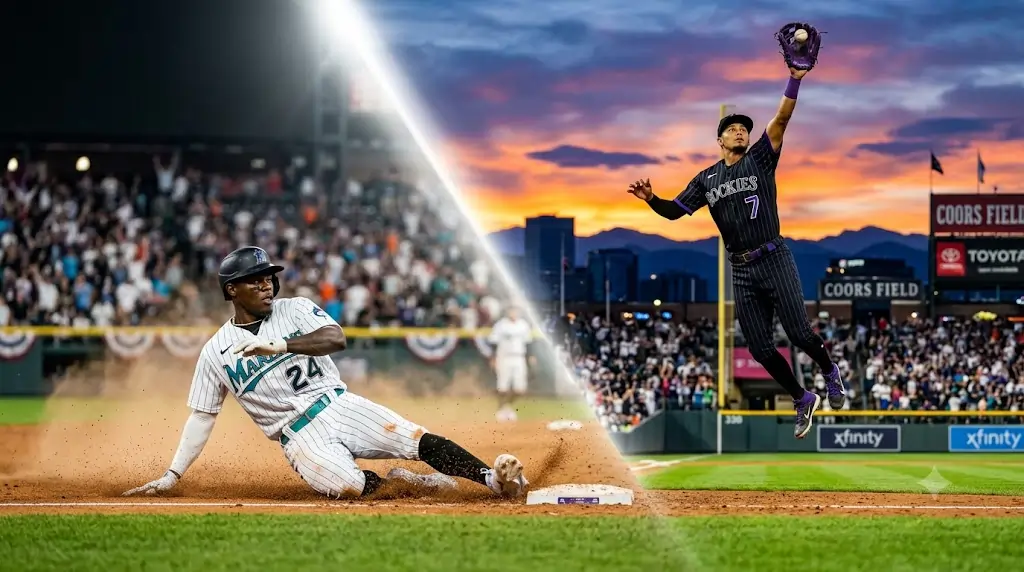
You open your phone expecting a win. Instead, your team blew a late lead again. Checking box scores feels useless when the numbers don’t tell you why it happened. This breakdown fixes that problem. We analyze every critical player matchup, recent performance trend, and head-to-head stat from Miami Marlins vs Colorado Rockies games. No fluff. Just the sharp analysis you need before the next pitch is thrown.
How the Marlins Built Their Current Roster Identity
The Miami Marlins constructed their lineup around speed and contact hitting. Luis Arraez changed the offensive approach completely when he arrived. His bat-to-ball abilities changed the appearance of the entire order. Pitchers facing Miami now worry about runners on base constantly.
Jazz Chisholm Jr. brings the power element that balances the contact-heavy approach. His swing generates natural loft that plays well in any ballpark. When Chisholm stays healthy, the Marlins offense transforms from pesky to dangerous.
The starting rotation relies heavily on ground ball rates. Sandy Alcantara throws a sinker that breaks bats and keeps his infield busy. Opposing hitters struggle to lift his pitches with any authority. This identity matters deeply when analyzing Miami Marlins vs Colorado Rockies matchups because Coors Field demands a specific pitching approach.
Jesus Luzardo provides the strikeout upside that complements Alcantara’s ground ball style. His fastball-slider combination misses bats at an elite rate. The bullpen remains the biggest question mark. Late leads have evaporated multiple times this season.
Key Marlins Identity Markers:
- Contact-heavy top of the order
- Ground ball pitching philosophy
- Speed threats on base paths
- Bullpen volatility in high-leverage spots
Rockies Offensive Approach at Coors Field Explained
Colorado plays a completely different game at home. The thin air at Coors Field reduces pitch movement dramatically. Breaking balls flatten out. Fastballs lose their ride. This reality shapes how the Rockies build their entire offensive strategy.
Charlie Blackmon mastered the Coors Field hitting environment over his long career. He uses the whole field and punishes pitchers who try to nibble the corners. His plate coverage frustrates even elite arms.
Ryan McMahon provides left-handed power that plays anywhere but becomes amplified at altitude. Gaps turn into triples. Routine fly balls carry over the fence. The Rockies lineup features several hitters with extreme home-road splits. Understanding these splits remains essential when examining Miami Marlins vs Colorado Rockies match player stats.
Nolan Jones emerged as a legitimate middle-order threat. His approach combines patience with raw power. Young hitters often struggle with the Coors Field adjustment. Jones adapted faster than most prospects.
Rockies Home Offensive Advantages:
- Pitch movement reduction at altitude
- Expanded outfield gaps for extra-base hits
- Veteran hitters who understand park nuances
- Young talent developing power stroke early
Starting Pitcher Matchup Breakdown and Projections
The starting pitching matchup determines most game outcomes before the first pitch. Sandy Alcantara brings his trademark sinker into the challenging Coors Field environment. His ground ball percentage ranks among the league’s best. That skill becomes even more valuable at altitude where fly balls travel dangerously.
German Marquez handles the Rockies home starts with experience and composure. His curveball remains his best weapon. The pitch generates swings and misses even in thin air. Marquez understands how to sequence his pitches differently at home compared to road starts.
The key to this matchup revolves around contact management. Alcantara wants hitters pounding the ball into the dirt. Marquez needs strikeouts to limit the damage potential at Coors. Two different philosophies collide when these teams meet.
Projected Pitching Lines Comparison Table:
| Pitcher | Primary Strength | Coors Field Risk | Expected Outcome |
| Sandy Alcantara | Ground ball rate | Fly ball carry | Quality start range |
| German Marquez | Curveball depth | Pitch flattening | Strikeout-dependent |
| Jesus Luzardo | Fastball velocity | Reduced movement | High variance game |
| Kyle Freeland | Pitch variety | Command issues | Run support needed |
Head-to-Head Team Offensive Statistics Comparison
Numbers tell the real story behind Miami Marlins vs Colorado Rockies matchups. Team batting average shows how consistently each lineup produces. On-base percentage reveals which team creates more scoring opportunities.
The Marlins rank in the middle tier for runs scored this season. Their contact approach generates fewer strikeouts but also fewer extra-base hits. Colorado at home transforms into a top-ten offensive unit. The park factor inflates their numbers significantly.
Slugging percentage highlights the biggest difference between these clubs. Miami lacks the raw power that Colorado develops naturally. The Rockies create more run-scoring events per game at Coors Field than almost any team in baseball.
Team Offensive Rankings Snapshot:
| Stat Category | Miami Marlins | Colorado Rockies (Home) |
| Team Batting Avg | .257 | .271 |
| On-Base % | .318 | .332 |
| Slugging % | .392 | .445 |
| Runs Per Game | 4.1 | 5.3 |
| Stolen Bases | 78 | 42 |
Key Player Matchups That Decide the Game
Certain individual battles within the game swing outcomes dramatically. Luis Arraez versus German Marquez creates a fascinating confrontation. The best contact hitter in baseball faces a pitcher who thrives on weak contact. Arraez rarely chases outside the zone. Marquez needs hitters to expand their strike zone.
Jazz Chisholm Jr. attacking Rockies left-handed relievers presents another critical matchup. Chisholm crushes fastballs at the top of the zone. Colorado’s bullpen throws heavy fastball usage patterns. This combination could produce extra-base damage late in games.
Ryan McMahon against Marlins left-handed starters offers a different dynamic. McMahon handles same-side pitching better than most left-handed hitters. His ability to drive the ball to the opposite field neutralizes the platoon disadvantage.
Matchup Factors to Watch:
- Arraez chase rate versus Marquez offspeed location
- Chisholm fastball damage potential late innings
- McMahon opposite-field power versus lefties
- Blackmon experience versus young Marlins relievers
Bullpen Comparison and Late-Game Strategy
Bullpens decide close games more than any other factor. Miami’s relief corps carries higher volatility than Colorado’s group. Tanner Scott throws elite stuff from the left side. His slider makes left-handed hitters look helpless. The problem remains command consistency.
Colorado rebuilt their bullpen approach this season. Justin Lawrence brings a unique arm angle that creates uncomfortable at-bats. His sinker moves more than most relievers in baseball. The Rockies bullpen performs better at home where they understand how pitches behave differently.
The late-inning strategy for both managers follows distinct patterns. Skip Schumaker prefers matchup-based deployment. Bud Black trusts his established roles more rigidly. These philosophical differences impact how Miami Marlins vs Colorado Rockies games finish.
Bullpen Key Metrics:
| Reliever | Role | Strikeout Rate | Walk Concern |
| Tanner Scott | High-leverage LHP | 11.2 K/9 | High |
| Justin Lawrence | Setup/Closer | 9.8 K/9 | Moderate |
| Andrew Nardi | Middle relief | 10.1 K/9 | Low |
| Jake Bird | Multi-inning | 7.5 K/9 | Low |
Coors Field Effect on Player Performance Numbers
Coors Field changes baseball physics. The altitude sits at 5,280 feet above sea level. Air density drops roughly 20% compared to sea-level ballparks. This reduction means less air resistance on batted balls. Fly balls travel approximately 5-10% farther.
Pitch movement suffers dramatically. Breaking balls experience less Magnus force effect. A curveball that drops 12 inches at sea level might only drop 8 inches in Denver. This explains why many pitchers struggle during their first Coors Field appearance.
The outfield dimensions create unique challenges too. The gaps feel massive because outfielders must play deeper to prevent extra-base hits. Singles become doubles. Line drives into the gap often turn into triples. These park factors heavily influence Miami Marlins vs Colorado Rockies match player stats.
Coors Field Statistical Impact:
- Run scoring increases approximately 40% compared to average park
- Home run rates jump 25-30% above league average
- BABIP rises due to larger outfield and reduced fielder range
- Strikeout rates slightly decrease because of reduced pitch movement
Recent Form Analysis for Both Clubs
Current momentum shapes game expectations significantly. The Marlins enter this matchup playing inconsistent baseball over their last ten games. Their offense produced runs in bunches during certain stretches then went silent completely. This inconsistency frustrates the coaching staff.
Colorado at home plays a completely different brand of baseball compared to their road struggles. The Rockies recently won series against quality opponents at Coors Field. Their bats awakened in the familiar altitude environment. Confidence builds quickly when the offense clicks.
The Marlins road record shows improvement compared to previous seasons. Winning away from Miami requires strong starting pitching performances. When Alcantara or Luzardo take the mound, the team believes they can compete anywhere. This psychological edge matters when examining Miami Marlins games against challenging opponents.
Season Series Implications and Standings Context
Every game carries weight in the crowded National League playoff picture. The Marlins chase a Wild Card spot desperately. Each loss to teams below them in Miami Marlins standings comparisons hurts their chances. The math demands winning series against clubs like Colorado.
Colorado plays spoiler role effectively at home. Teams traveling to Denver often underestimate the challenge. The Rockies feed off the home crowd energy during competitive games. Their record shows they beat playoff contenders regularly at Coors Field.
The season series between these clubs tilts based on which version of each team shows up. Miami won previous meetings this season. Colorado seeks revenge in their home environment. These narrative layers add intensity to every pitch of Miami Marlins vs Colorado Rockies battles.
How Recent Roster Moves Affect This Matchup
Trade deadline activity reshaped both rosters slightly. Miami added bullpen depth through minor deals. The new relief arms need time to adjust to high-leverage roles. Chemistry in the bullpen takes weeks to develop properly.
Colorado moved veteran pieces for prospects. The young players receiving opportunities bring energy but lack experience. Rookies often perform well initially before the league adjusts to their weaknesses. Timing matters tremendously for player evaluation purposes.
Injury returns also impact lineup construction for this series. Key hitters returning from the injured list need time to regain timing. Pitchers coming off rehab assignments rarely throw their best immediately. These human elements get overlooked in pure statistical analysis.
Three Critical Factors for Marlins Victory
First, Miami must generate early offense against Rockies starters. German Marquez settles into games after the first two innings. Scoring early prevents him from finding his rhythm. The Marlins contact hitters match up well early in counts before Marquez establishes his breaking ball.
Second, the infield defense must convert ground balls into outs. Coors Field’s large outfield means any ball reaching the grass becomes a hit. Alcantara relies on his defenders making routine plays behind him. Errors or mental mistakes amplify in the high-scoring Coors environment.
Third, the bullpen cannot blow another late lead. Skip Schumaker needs his best relievers available regardless of matchups. Saving pitchers for tomorrow makes no sense when a win sits within reach today. Aggressive bullpen management wins games on the road.
Three Critical Factors for Rockies Victory
Colorado must capitalize on Marlins starting pitcher mistakes early. Missed locations at Coors Field end up in the seats or gaps. Patience at the plate forces Miami starters into deeper counts. Deeper counts create more mistake opportunities.
The Rockies defense needs to convert chances behind their pitchers. Coors Field creates more total balls in play than any park. Defenders face more opportunities and more challenging plays. Clean defensive games correlate strongly with Rockies victories.
The home crowd energy matters more than analysts admit. Colorado plays with visible swagger when the Denver fans engage fully. Quick starts ignite the crowd. Loud crowds rattle visiting players unfamiliar with the environment. This intangible factor influences Miami Marlins vs Colorado Rockies match player stats in unexpected ways.
FAQs
Who has the better head-to-head record in Miami Marlins vs Colorado Rockies games?
The overall series history splits nearly evenly between these clubs. Miami holds a slight edge in recent seasons. The Rockies dominate more at Coors Field specifically. Home field advantage strongly predicts the outcome of this matchup.
What player stats matter most for Marlins vs Rockies games?
Contact rate and ground ball percentage rank as most predictive. Pitchers with high ground ball rates succeed more at Coors Field. Hitters with low strikeout rates produce more consistently in the altitude environment. Power numbers become inflated but contact skills determine who reaches base.
How does Coors Field change the way managers make decisions?
Managers must adjust bullpen usage aggressively. Quick hooks become necessary when pitchers show any signs of struggling. Pinch-hitting decisions happen earlier. The elevated run-scoring environment forces constant strategic recalibration throughout the game.
Where do the Marlins currently sit in the standings?
Miami Marlins standings position places them in the thick of the National League Wild Card race. They trail the leaders by a manageable margin. Every series carries playoff implication weight from this point forward. The margin for error shrinks with each passing week.
What time do the Marlins play their next game?
Check the latest Miami Marlins schedule for exact first pitch times. Depending on the needs of television broadcasts, game times change. Weekend games often feature different start times than weekday matchups. Official team sources provide the most accurate timing information.
Which team hits more home runs in Marlins vs Rockies games?
Colorado typically out-hompers Miami in this matchup. The Coors Field effect inflates Rockies power numbers significantly. Marlins contact approach produces fewer fly balls overall. The park factor creates the biggest disparity in home run production between these clubs.
Conclusion
You now own the complete breakdown for this matchup. The starting pitching edges, the bullpen vulnerabilities, the park effects, and the individual battles all point toward a competitive game defined by late-inning execution. Miami needs ground balls and early offense. Colorado needs patience and mistake punishment. Watch how the managers deploy their bullpens during the critical sixth and seventh innings. That decision point usually determines the final outcome.
Bookmark this analysis for reference during the game. Share it with fellow fans who want deeper understanding beyond basic box scores. Check back for updated Miami Marlins vs Colorado Rockies match player stats after the final pitch. Your smarter baseball experience starts right here.